
Follow the Money – Strengthening Development Transparency
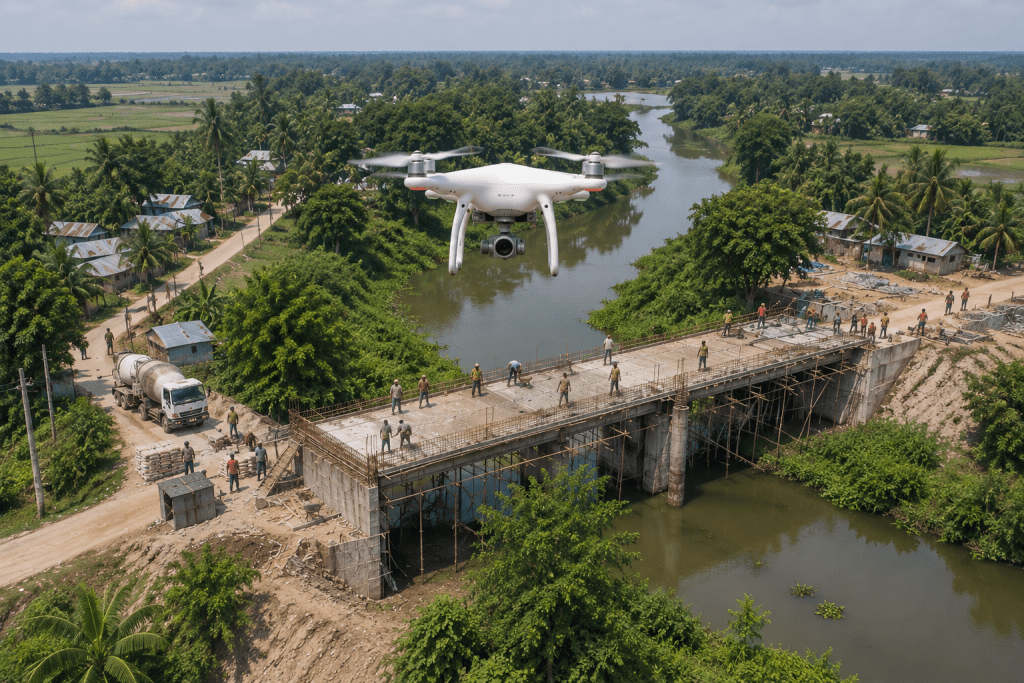
Development financing is entering a turbulent period. As the current U.S. administration advances its “America First” agenda and European countries confront the need to increase their defense spending, the availability of development financing is likely to continue to suffer the consequences. The numbers are already stark: official development assistance fell 23.1% in 2025, the largest single-year drop ever recorded, with a further decline projected for 2026 — and aid to sub-Saharan Africa fell by more than a quarter. The expectation that the private sector will simply “step in” to fill this void seems unrealistic. The global community will need to approach the future of development financing with the understanding that less funding will come from wealthier nations. For scale, official development assistance totaled USD 174.3 billion in 2025 — a seemingly large sum in absolute terms, but a modest one compared to the needs of so many countries where citizens still lack basic necessities such as food, healthcare, water and electricity. More than ever, the priority for development finance rests far less on how much of it there is than on how well it is spent. The impulse behind “America First” contains something the development community should not be quick to dismiss. That public money must be accounted for, that taxpayers are owed evidence rather than assurances, and that spending should be judged on results rather than on intentions. These are not hostile propositions. They are the standard the sector already claims for itself. The disagreement is not over whether development finance should have to prove its worth. It is over what follows when it cannot. One answer is to spend less, and that is the answer currently being given. The other is to demonstrate, project by project, that the money arrived where it was sent and did what it was meant to do. The second is considerably harder. It is also the only one that preserves both the funding and the influence that comes with it. It is worth being plain about what is at stake. Much of development financing is money lent or granted to the governments of poorer countries to build what markets will not fund on their own — roads, clinics, power grids, water systems, schools — on terms no commercial lender would offer, frequently at little or no interest, and repayable over thirty or forty years. The distance between the terms offered and the terms the risk would justify is a subsidy, and that subsidy is paid for by taxpayers in donor countries. It is precisely why they have standing to ask what became of it. When development finance goes to governments, not to companies, nobody owns the resulting asset the way an investor owns a factory. Hence, nobody has their own capital at risk and watches the site accordingly. In commercial finance, scrutiny is a by-product of self-interest; a bank protecting its collateral needs no encouragement to check that the building went up. In development finance, that scrutiny has to be built deliberately, because it does not arise on its own. This is not a failing of the institutions. It is a structural feature of financing public goods with subsidised money, and it is the reason oversight is a design question rather than an afterthought. This understanding should sharpen the focus of development professionals on two priorities with respect to the funds that remain available for use. First, safeguarding that development funds are, in fact, used for development purposes becomes even more essential. Second, ensuring that financed projects achieve meaningful and measurable outcomes is even more critical. Neither of these is a donor preoccupation. Taxpayers in contributing countries want evidence that their money was spent as intended. Borrowing governments, which repay these loans out of public revenue, have every reason to want the same. And the communities these projects exist to serve have the greatest stake of all – they are the ones who go without when funds go astray. On this question, the interests of all parties align far more closely than the politics usually suggests — and that alignment is the strongest argument for doing something about it. Over the past three decades, multilateral organizations have strengthened their oversight functions to investigate and sanction entities and individuals who seek to divert development financing for improper purposes. Major victories have been few and far between, which also means that the deterrent effect of such mechanisms remains limited. Although coordination between agencies has improved, multilateral organizations’ lack of investigative powers — subpoenas, surveillance, etc. — hampers their ability to pursue important cases. If enforcement cannot be scaled, prevention must be. One promising development is the World Bank’s use of blockchain technology to follow project funds from the Bank to its borrowers and contractors. Launched in September 2025 after trials across thirteen projects in ten countries, FundsChain has already been extended to roughly 250 projects, allowing the Bank and its borrowers to trace disbursements through to final payment; reporting that once took months can now be produced in minutes. This type of tracking will need to be adopted by other organizations. FundsChain, however, only follows the money. A commercial lender knows almost immediately whether its loan worked: it was repaid, or it was not. A development institution enjoys no such clarity because its success is measured socially rather than financially. It can be repaid in full on a clinic that was never built. FundsChain establishes that a payment was made to a particular party; it does not establish that anything was delivered, and closing that gap is beyond what any ledger can do. Multilateral organizations should insist on more transparent evidence of impact, and Amazon’s delivery model offers a simple example. When a driver leaves a package at its final destination, they photograph it on the doorstep, even when the item is of minimal cost. The development community should demand the same. Governments, multilateral organizations and their donors could all have easy access to photographic evidence of supplies delivered to a hospital or of
