
It is estimated that corruption, bribery, theft, and tax evasion represent an annual cost of US $2.6 trillion per year worldwide, or 5% of global gross domestic product (UN, 2018). Constituting a significant percentage of public spending, namely 12% of worldwide GDP, research into public procurement has revealed corruption to be frequent and costly. The World Bank considers corruption in public procurement to be “rampant” with the cost of capital investment projects being consumed by corruption estimated to range from 10% to 30% (World Bank 2020). Corruption in public procurement has been proven to not only have a disproportionate impact on the wellbeing of the most vulnerable sectors of society, but also distorts overall economic development overall. The importance and benefits of reducing corruption and implementing open government initiatives in public procurement for social and economic development have therefore been widely documented.
Based on international best practice, operational evidence, and the latest developments in e-procurement, GBPG has developed a transparency prism that translates theory into practice and builds on our experience in the field to assist policy makers, procurement planners and procurement staff in implementing the comprehensive, open, and clear mechanisms required to maintain a transparent procurement system.
Impact, Challenges & the Need for Transparency
It is estimated that corruption, bribery, theft, and tax evasion represent an annual cost of US $2.6 trillion per year worldwide, or 5% of global gross domestic product (UN, 2018). Constituting a significant percentage of public spending, namely 12% of worldwide GDP, research into public procurement has revealed corruption to be frequent and costly. The World Bank considers corruption in public procurement to be “rampant” with the cost of capital investment projects being consumed by corruption estimated to range from 10% to 30% (World Bank 2020). Corruption in public procurement has been proven to not only have a disproportionate impact on the wellbeing of the most vulnerable sectors of society, but also distorts overall economic development overall. The importance and benefits of reducing corruption and implementing open government initiatives in public procurement for social and economic development have therefore been widely documented.
Based on international best practice, operational evidence, and the latest developments in e-procurement, GBPG has developed a transparency prism that translates theory into practice and builds on our experience in the field to assist policy makers, procurement planners and procurement staff in implementing the comprehensive, open, and clear mechanisms required to maintain a transparent procurement system.
The Transparency Prisms consists of 6 dimensions
The Transparency Prism consists of 6 Dimensions
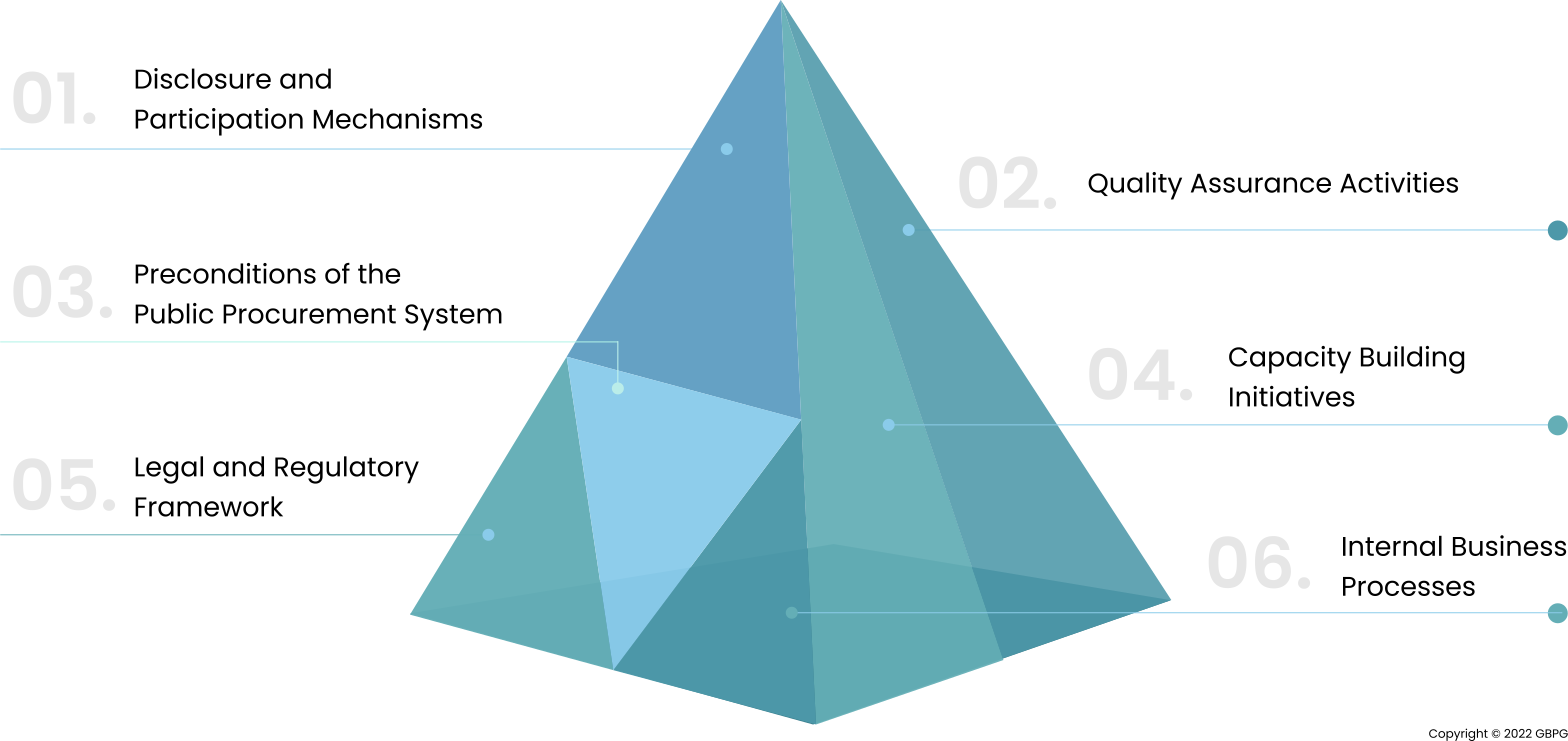
Publication and disclosure are central and tangible pillars of transparency mechanisms. Accessible and timely publication of public procurement information and data allows for greater participation, scrutiny, and engagement. E-procurement tools make publication easy, cost-effective and high-impact. They allow for the immediate and standardized publication of tender notices and award decisions, dissemination of control and audit reports, archiving of documentation and on-line consultation of the different documents created and used during the procurement cycle. The distinction is sometimes made between active and passive transparency, in other words proactively disclosing information for example on a website versus releasing information to the public upon specific request. Where not bound by confidentiality concerns, proactive/ active disclosure should always be preferred for maximum impact on transparency.
The Prism defines in detail the transparency mechanisms for each dimension. It also provides guiding principles and where required, a regulatory framework for processes and activities where no previous standardized principles or norms for standardization were available (as in the case of E-procurement).
Transparency prism
Transparency mechanisms and guidelines in E-procurement
Publication and disclosure are central and tangible pillars of transparency mechanisms. Accessible and timely publication of public procurement information and data allows for greater participation, scrutiny, and engagement. E-procurement tools make publication easy, cost-effective and high-impact. They allow for the immediate and standardized publication of tender notices and award decisions, dissemination of control and audit reports, archiving of documentation and on-line consultation of the different documents created and used during the procurement cycle. The distinction is sometimes made between active and passive transparency, in other words proactively disclosing information for example on a website versus releasing information to the public upon specific request. Where not bound by confidentiality concerns, proactive/ active disclosure should always be preferred for maximum impact on transparency.
The Prism defines in detail the transparency mechanisms for each dimension. It also provides guiding principles and where required, a regulatory framework for processes and activities where no previous standardized principles or norms for standardization were available (as in the case of E-procurement).
Foundational Principles for Transparency
Retrievable
Read More
Transparency information should be easy to find. This includes simple steps such as uploading full-text searchable documents which can be indexed within websites and search engine, but also ensuring the prominence and visibility of public procurement on the appropriate website, for example through a link on the public entities homepage.
Centralised
Read More
Ideally all published government procurement information should be centralised in one portal to ensure easy and quick access and reducing the prior knowledge required on behalf of the public to identify where relevant information may be stored.
Consistent
Read More
Timely
Read More
Regular
Read More
Clear
Read More
Accessible
Read More
Usable
Read More
Disseminated
Read More
Contact
Read More
Retrievable
Transparency information should be easy to find. This includes simple steps such as uploading full-text searchable documents which can be indexed within websites and search engine, but also ensuring the prominence and visibility of public procurement on the appropriate website, for example through a link on the public entities homepage.
Centralised
Ideally all published government procurement information should be centralised in one portal to ensure easy and quick access and reducing the prior knowledge required on behalf of the public to identify where relevant information may be stored.
Consistent
Documents should always be published in the same way, making their appearance, location and scope predictable and therefore easier to understand and retrieve.
Timely
Information should be available immediately upon its release, or as soon as possible considering any confidentiality requirements.
Regular
The publication of information should be predictable and where relevant, for example Annual Reports or statistics, be done at regular intervals.
Clear
It should be clear to the public which information will and will not be published and what the scope of existing information repositories is. This allows for scrutiny and monitoring.
Accessible
Information should be published free of charge, following website accessibility principles, including best practice measures to accommodate those visually impaired. Tender related information, but also platform guides, user manuals, rules and contextual information should be made available in English for bids open to international suppliers.
Usable
Documents should provide sufficient context to be understandable by a member of the public and not be redacted beyond what is strictly required in order not to inhibit comprehension.
Disseminated
Published procurement information should be available online, but also be actively disseminated, for example via appropriate social media channels and allow for those interested to receive content alerts.
Contact
All e-procurement information must be provided with an email address/hotline number where issues, problems and queries concerning operational e-procurement can be addressed quickly and in real time with no significant time lags.
- Retrievable
- Centralised
- Consistent
- Timely
- Regular
- Clear
- Accessible
- Usable
- Disseminated
- Contact
Transparency information should be easy to find. This includes simple steps such as uploading full-text searchable documents which can be indexed within websites and search engine, but also ensuring the prominence and visibility of public procurement on the appropriate website, for example through a link on the public entities homepage.
Transparency information should be easy to find. This includes simple steps such as uploading full-text searchable documents which can be indexed within websites and search engine, but also ensuring the prominence and visibility of public procurement on the appropriate website, for example through a link on the public entities homepage.
Transparency information should be easy to find. This includes simple steps such as uploading full-text searchable documents which can be indexed within websites and search engine, but also ensuring the prominence and visibility of public procurement on the appropriate website, for example through a link on the public entities homepage.
Transparency information should be easy to find. This includes simple steps such as uploading full-text searchable documents which can be indexed within websites and search engine, but also ensuring the prominence and visibility of public procurement on the appropriate website, for example through a link on the public entities homepage.
The publication of information should be predictable and where relevant, for example Annual Reports or statistics, be done at regular intervals.
It should be clear to the public which information will and will not be published and what the scope of existing information repositories is. This allows for scrutiny and monitoring.
Information should be published free of charge, following website accessibility principles, including best practice measures to accommodate those visually impaired. Tender related information, but also platform guides, user manuals, rules and contextual information should be made available in English for bids open to international suppliers.
Documents should provide sufficient context to be understandable by a member of the public and not be redacted beyond what is strictly required in order not to inhibit comprehension.
Published procurement information should be available online, but also be actively disseminated, for example via appropriate social media channels and allow for those interested to receive content alerts.
All e-procurement information must be provided with an email address/hotline number where issues, problems and queries concerning operational e-procurement can be addressed quickly and in real time with no significant time lags.
Transparency information should be easy to find. This includes simple steps such as uploading full-text searchable documents which can be indexed within websites and search engine, but also ensuring the prominence and visibility of public procurement on the appropriate website, for example through a link on the public entities homepage.
Ideally all published government procurement information should be centralised in one portal to ensure easy and quick access and reducing the prior knowledge required on behalf of the public to identify where relevant information may be stored.
Documents should always be published in the same way, making their appearance, location and scope predictable and therefore easier to understand and retrieve.
Information should be available immediately upon its release, or as soon as possible considering any confidentiality requirements.
The publication of information should be predictable and where relevant, for example Annual Reports or statistics, be done at regular intervals.
It should be clear to the public which information will and will not be published and what the scope of existing information repositories is. This allows for scrutiny and monitoring.
Information should be published free of charge, following website accessibility principles, including best practice measures to accommodate those visually impaired. Tender related information, but also platform guides, user manuals, rules and contextual information should be made available in English for bids open to international suppliers.
Documents should provide sufficient context to be understandable by a member of the public and not be redacted beyond what is strictly required in order not to inhibit comprehension.
Published procurement information should be available online, but also be actively disseminated, for example via appropriate social media channels and allow for those interested to receive content alerts.
All e-procurement information must be provided with an email address/hotline number where issues, problems and queries concerning operational e-procurement can be addressed quickly and in real time with no significant time lags.
