
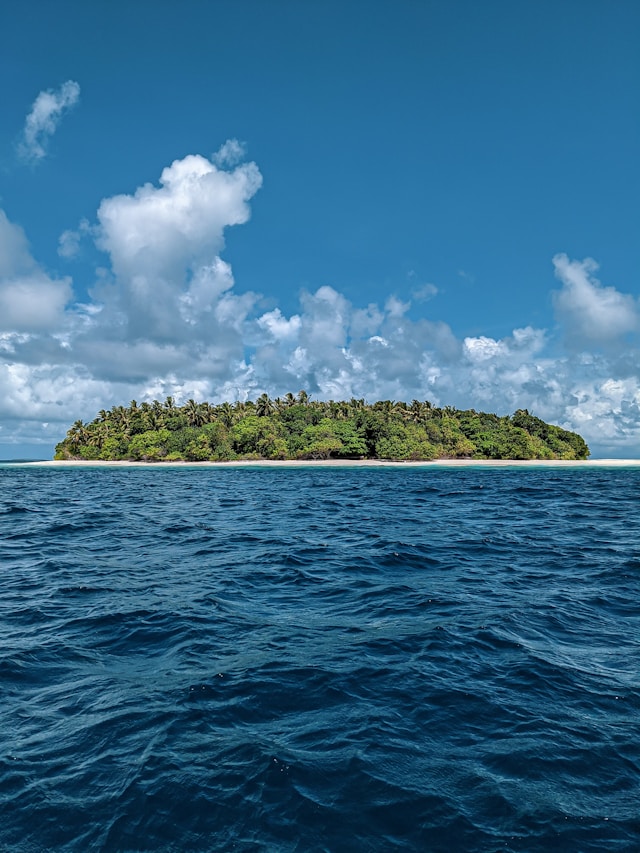

What do you do if your homeland is sinking due to the effects of climate change? Tuvalu may be losing land to the ocean, but it refuses to lose its voice, its sovereignty, or its future.
Located in the heart of the Pacific Ocean, the island nation of Tuvalu is facing an existential threat. With a population of just over 11,000 and a land area of only 26 square kilometers, Tuvalu is one of the world’s smallest countries—and one of the most vulnerable to climate change. Tuvalu is an archipelago consisting of 9 islands—three reef islands and six atolls—spread across just 26 km² of land (That’s about 0.8 times the size of Manhattan!). The highest elevation is a mere 5 meters, making Tuvalu extremely vulnerable to rising sea levels. Despite its size, this island nation offers a rich cultural heritage, unique geography, and pressing challenges that make it a compelling subject for global attention. In fact Tuvalu is setting an example for other nations facing climate threats.
Why Is Tuvalu Sinking?
Tuvalu isn’t sinking in the traditional geological sense. Instead, it’s being submerged by rising sea levels caused by global warming due to:
- Melting Polar Ice Caps: As global temperatures rise, ice sheets in Greenland and Antarctica are melting at unprecedented rates. This meltwater flows into the oceans, raising sea levels worldwide.
- Thermal Expansion: Warmer water expands. As the oceans absorb more heat, their volume increases—another contributor to rising sea levels.
- Changing Weather Patterns: Climate change is intensifying storms and altering rainfall patterns. Tuvalu experiences more frequent “king: tides”, which flood homes, contaminate freshwater supplies, and erode coastlines.
- Coral Reef Degradation: Tuvalu’s natural defences—its coral reefs—are dying due to ocean acidification and warming. Without these barriers, waves crash directly onto the islands, accelerating erosion.
The Human Impact
For the people of Tuvalu, climate change is not a distant concern discussed in global forums—it is an immediate and unrelenting part of daily life. Rising sea levels steadily erode the narrow strips of land that make up the islands, forcing families to adapt in extraordinary ways. Homes are raised on stilts to escape flooding tides, seawalls are hastily built to hold back advancing waves, and fresh water increasingly comes from imported supplies as local sources are contaminated by saltwater intrusion. Agriculture, once a reliable source of food and livelihood, is faltering as crops fail in saline soils, leaving families dependent on imports. Beyond these daily struggles, entire communities are now confronting the painful reality of relocation. Some Tuvaluans have already begun migrating to New Zealand and Australia, seeking safety and security for future generations. For them, climate change is not merely an environmental issue—it is a question of survival, sovereignty, and cultural identity.
Fighting Back Against Rising Seas
Although experts admit that it may only delay the inevitable, Tuvalu is fighting back against the rising seas. In its fight its engagement with international donors increasingly underscores the importance of innovative forms of support alongside traditional assistance. While conventional aid has helped strengthen infrastructure and provide immediate relief, the scale and nature of climate challenges require new approaches. Potential areas include climate-resilient housing and energy systems, digital tools to preserve governance and cultural heritage, and financing mechanisms such as climate insurance or blue bonds. For Tuvalu, innovative solutions offer a pathway to long-term resilience and sustainability in the face of rising seas.
Some of the planned measures include:
Tuvalu Long-Term Adaptation Plan (L-TAP): Launched in 2022, the L-TAP is Tuvalu’s most ambitious and science-based national strategy to adapt to sea level rise. Developed in partnership with the United Nations Development Programme (UNDP), the plan aims to:
- Create 3.6 km² of raised, flood-free land in the capital Funafuti.
- Relocate communities and infrastructure from outer islands to safer, elevated zones.
- Build new housing, transport facilities, and water systems designed to withstand future climate conditions.
- Plan for post-2100 scenarios, including further land elevation if needed. The plan uses LiDAR technology to map land elevation and sea floor depth across all nine atolls, enabling precise engineering and planning.
Tuvalu Coastal Adaptation Project (TCAP): Running from 2017 to 2025, TCAP is a $38.9 million initiative funded by the Green Climate Fund and Tuvalu’s government. Its goals include:
- Protecting 2,780 meters of vulnerable coastline across three islands (Funafuti, Nanumea, Nanumaga).
- Constructing sea walls, rock revetments, and beach nourishment systems.
- Strengthening national capacity for resilient coastal management.
- Creating 7.3 hectares of raised land to secure communities from marine
This project is expected to benefit over 60% of Tuvalu’s population directly or indirectly.
Technology-Driven Solutions: Tuvalu is embracing cutting-edge tools to guide its adaptation efforts:
- LiDAR mapping for accurate elevation and flood risk modeling.
- Online platforms for shoreline monitoring and hazard planning.
- Wave inundation modeling systems to predict future storm impacts. These tools help Tuvalu make data-driven decisions and attract international support.
Planned Relocation & Urban Development: Given the lack of higher ground, Tuvalu is reclaiming and elevating land to host relocated populations. The new zones will include:
- Homes, schools, hospitals, and government offices
- Stormwater drainage systems
- Rainwater catchment infrastructure
- Safe ports and airports
This urban transformation is designed to be resilient beyond 2100.
Global Advocacy & Funding: Tuvalu is also leading international efforts to:
- Highlight “loss and damage” caused by emissions from industrialized nations.
- Mobilize climate finance from donors and private capital.
- Promote climate justice for small island developing states.
Digital Tuvalu
To protect its heritage even if the islands are completely abandoned, Tuvalu has decided to become the world’s first digital nation. Tuvalu’s digitization strategy is part of a broader initiative called Digital Tuvalu, which aims to transform the country into the world’s first digital nation. This bold move is driven by the urgent need to preserve Tuvalu’s sovereignty, culture, and governance as rising sea levels threaten its physical existence. The plan was unveiled at COP27 by Minister Simon Kofe, who delivered a speech from a digitally recreated version of Te Afualiku Islet, symbolizing Tuvalu’s commitment to virtual continuity.
Tuvalu is migrating all government services, records, and civic functions to the cloud. This includes:
- Digital passports stored on blockchain
- Virtual platforms for elections and civil participation
- Online access to public services like health, education, and legal systems
The initiative also involves cultural & environmental preservation including digitizing:
- Historical archives and cultural artifacts
- Land maps and ecological data
- Native species records and reef systems
This ensures Tuvalu’s heritage and biodiversity are preserved even if its land is lost.
But Tuvalu’s digital nation concept is not just symbolic—it’s a legal and diplomatic strategy. By creating a permanent digital replica of its territory, Tuvalu aims to:
- Retain international recognition as a sovereign state
- Argue for virtual territory rights under international law
- Continue participating in global governance
A Model for Climate Resilience
Tuvalu’s digital government plan is a pioneering model for climate resilience, digital sovereignty, and inclusive governance. It shows how technology can empower vulnerable nations to adapt, preserve identity, and lead global innovation. Tuvalu’s proactive stance is not just about survival—it’s about leadership.
A Global Wake-Up Call
Tuvalu is a stark reminder that climate change is not just about temperature graphs and carbon emissions—it is about people, homes, and entire nations at risk of vanishing. On these fragile islands, rising seas wash away ancestral lands, threaten food and water security, and force families to make the unimaginable choice between staying and risking disaster, or leaving behind centuries of culture and identity. The fate of Tuvalu is a test of global solidarity: whether the world’s largest emitters and wealthiest economies will move beyond pledges and deliver concrete action. High-emission countries carry a particular responsibility to cut greenhouse gases at the source while also investing in adaptation, resilience, and innovative support for nations on the frontlines.
What is needed are bold and creative responses. Tuvalu’s struggle is a warning, but also an opportunity: an opportunity for the international community to prove that climate justice is not a slogan, but a lived reality. How the world responds will determine not only the survival of Tuvalu, but the moral credibility of the global fight against climate change.
Sources
- TAP: Tuvalu Long-term Adaptation Plan – Ocean & Climate [Available] ocean-climate.org
- How Tuvalu is using technology to adapt to rising sea levels [Available] weforum.org
- Tuvalu Coastal Adaptation Project | UNDP Climate Change Adaptation [Available] adaptation-undp.org
- Tuvalu Convenes High-Level Donor Roundtable To Accelerate Climate [Available] undp.org
- Ecosystem-based Adaptation in Tuvalu 2024-2029 [Available] UNEP unep.org
- Tuvalu Coastal Adaptation Project [Available] tcap.tv
- NASA-UN Partnership Gauges Sea Level Threat to Tuvalu [Available] sealevel.nasa.gov
- How Is Tuvalu Being Affected By Sea Level Rise [Available] climatecontroljournal.com
Disclaimer: Statements expressed in this blog reflect the personal opinion of the author and do not represent the position or policy of GBPG or entities we are affiliated with. While we strive to ensure the accuracy of the information presented, we make no guarantees regarding its completeness, reliability, or accuracy.
